What Are Arguments Agains the Wall
Along the U.S. Mexico near Nogales, Arizona Getty Images
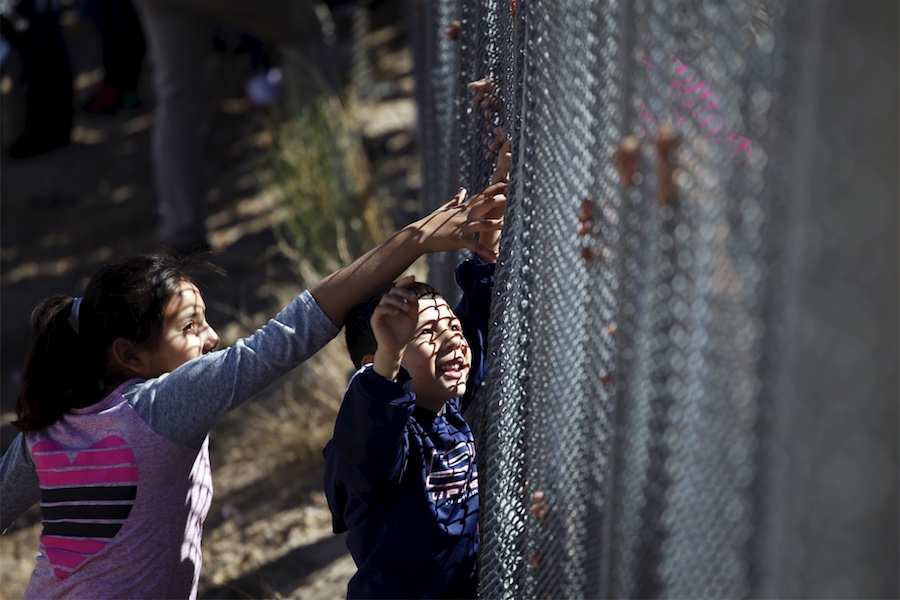
August 2017The cheerful paintings of flowers on the tall metal posts on the Tijuana side of the border contend between the U.Southward. and Mexico belie the sadness of the Mexican families who take gathered there to exchange whispers, tears, and jokes with relatives on the San Diego side.

Many accept been separated from their family unit members for years. Some were deported to Mexico after having lived in the Us for decades without authorisation, leaving backside children, spouses, siblings, and parents. Others never left Mexico, simply have made their mode to the contend to encounter relatives in the United states. With its prison–like ambience and Orwellian name—Friendship Park—this site is one of the very few places where families separated by immigration rules can accept even fleeting contact with their loved ones, from 10 a.m. to two p.m. on Saturdays and Sundays. Elsewhere, the tall metal barrier is heavily patrolled.
So is to exist the wall that President Donald Trump promises to build along the edge. But no thing how alpine and thick a wall will exist, illicit flows will cantankerous.
Undocumented workers and drugs will still notice their way beyond any barrier the administration ends up edifice. And such a wall will be irrelevant to those people who get undocumented immigrants by overstaying their visas—who for many years accept outnumbered those who get undocumented immigrants by crossing the U.Southward.–United mexican states border.
Nor volition the concrete wall raise U.S. security.
The border, and more broadly how the U.s. defines its relations with Mexico, straight affects the 12 one thousand thousand people who live within 100 miles of the border. In multiple and very meaning ways that have not been acknowledged or understood it will also bear on communities all across the The states as well as Mexico.
What the wall's price tag would be
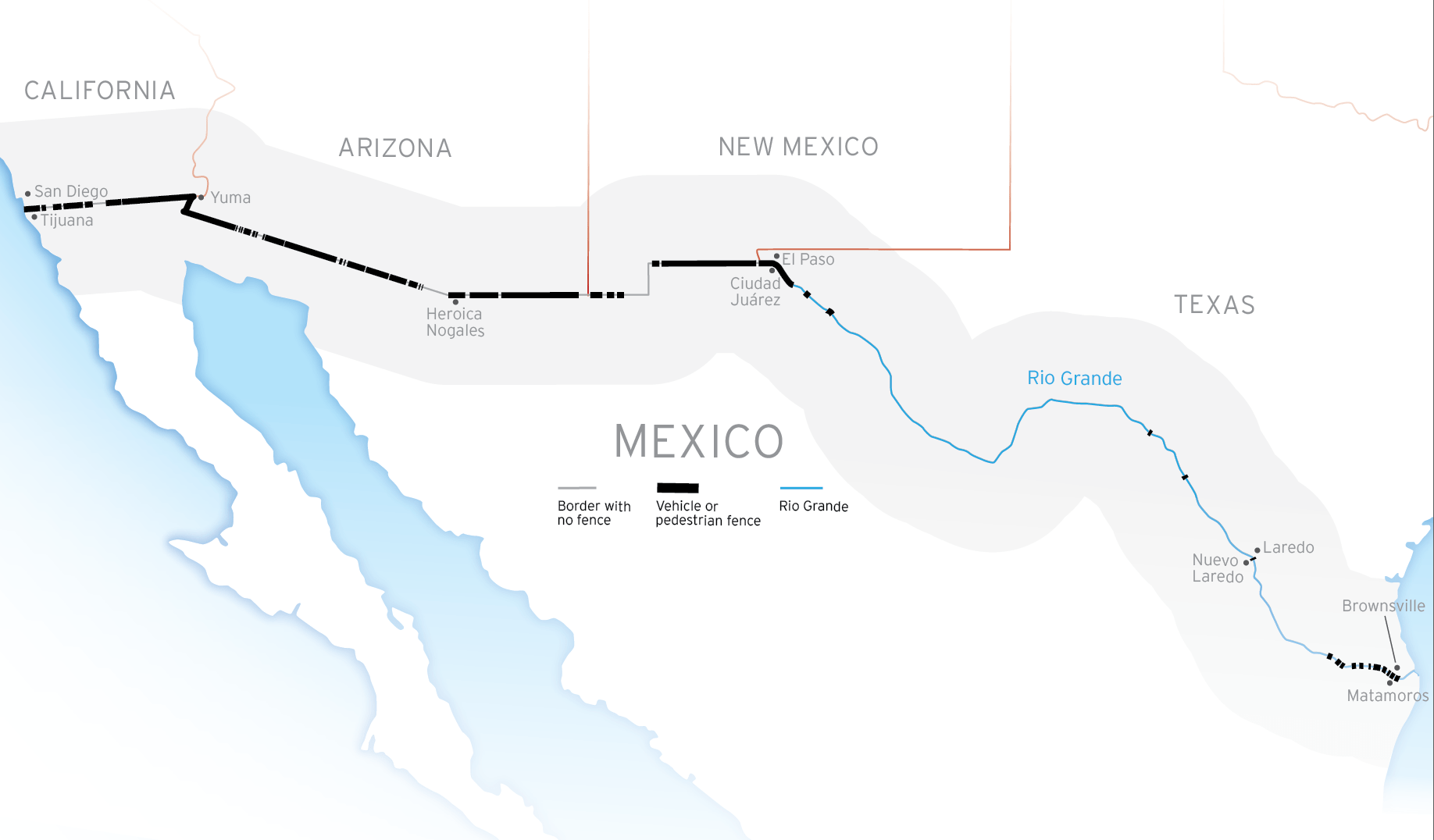
The wall comes with many costs, some obvious though difficult to estimate, some unforeseen. The most obvious is the big fiscal outlay required to build information technology, in whatsoever form information technology somewhen takes. Although during the election campaign candidate Trump claimed that the wall would cost simply $12 billion, a Department of Homeland Security (DHS) internal report in Feb put the cost at $21.vi billion, just that may be a major underestimate.
The estimates vary so widely because of the lack of clarity about what the wall will actually consist of beyond the first meager Homeland Security specifications that it be either a solid concrete wall or a see–through structure, "physically imposing in height," ideally 30 anxiety high simply no less than 18 feet, sunk at least six feet into the ground to prevent tunneling nether information technology; that it should not be scalable with even sophisticated climbing aids; and that it should withstand prolonged attacks with impact tools, cutting tools, and torches. But that description doesn't begin to cover questions most the details of its concrete structure. Then there are the legal fees required to seize country on which to build the wall. The Trump assistants can employ eminent domain to acquire the land just will still have to negotiate compensation and often face lawsuits. More than ninety such lawsuits in southern Texas alone are nevertheless open from the 2008 effort to build a argue there.
The Trump assistants cannot simply seize remittances to Mexico to pay for the wall; doing so may increase flows of undocumented workers to the United States. Remittances provide many Mexicans with amenities they could never afford otherwise. But for Mexicans living in poverty—some 46.ii percent in 2015 co-ordinate to the Mexican social inquiry agency CONEVAL—the remittances are a veritable lifeline which tin can stand for as much equally 80 percent of their income. These families count on that coin for the basics of life—food, wearable, health intendance, and educational activity for their children.
The remittances enable human and economical development throughout the country, and this in turn reduces the incentives for further migration to the Usa — precisely what Trump is aiming to do.
I met the matron of 1 of those families in a lush simply desperately poor mountain village in Guerrero. Rosa, a forceful woman who was initially suspicious, decided to confide in me. Her son had crossed into the U.s. eight years agone, she said. The remittances he sent allowed Rosa's grandchildren to get medical handling at the nearest clinic, some thirty miles away. Similar Rosa, many people in the village had male relatives working illegally in the United States in social club to assistance their families make ends meet. Sierra de Atoyac may be paradise for a birdwatcher (which I am), but Guerrero is one of Mexico's poorest, most neglected, and criminal offense and violence–ridden states. "Here you lot have few chances," Rosa explained to me. "If you lot're smart, like my son, you go far across the border to the U.S. If you're not and then smart, you lot join the narcos. If you're stupid, but lucky, you join the [municipal] police. Otherwise, yous're stuck here farming or logging and starving."
Construction toll estimates*

Any attempt to seize the remittances from such families would be devastating. Fluctuating between $20 billion and $25 billion annually during the past decade, remittances from the United States have amounted to nigh 3 percent of Mexico's GDP, representing the third–largest source of foreign revenue afterward oil and tourism. The remittances enable homo and economic development throughout the country, and this in turn reduces the incentives for further migration to the Usa—precisely what Trump is aiming to do.
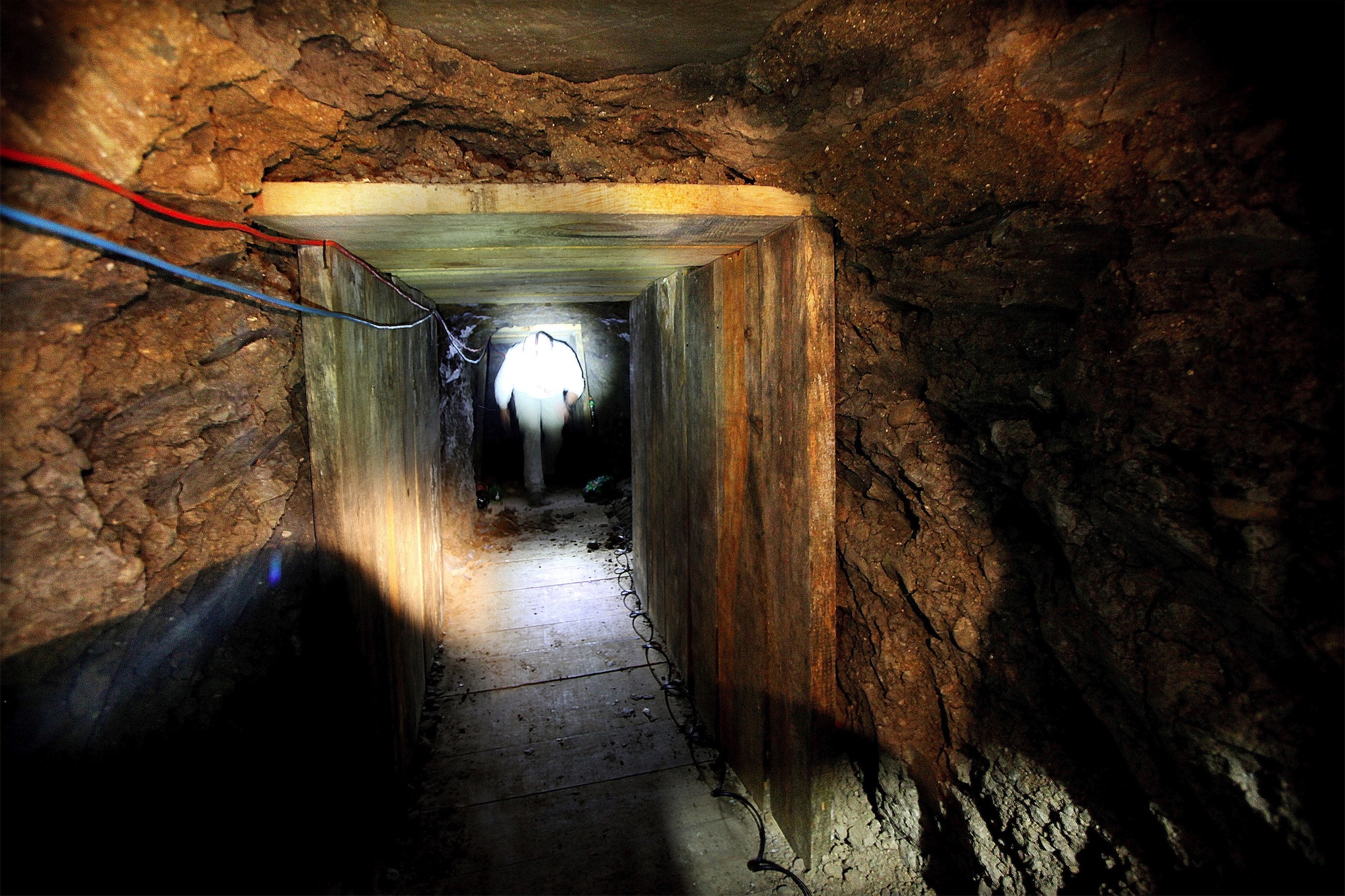
A tunnel between Tijuana and a warehouse in California featured an lift. Getty Images
Why the wall wouldn't cease smuggling
Why the DHS believes that a 30–foot tall wall cannot exist scaled and a tunnel cannot be built deeper than six feet below ground is not articulate.
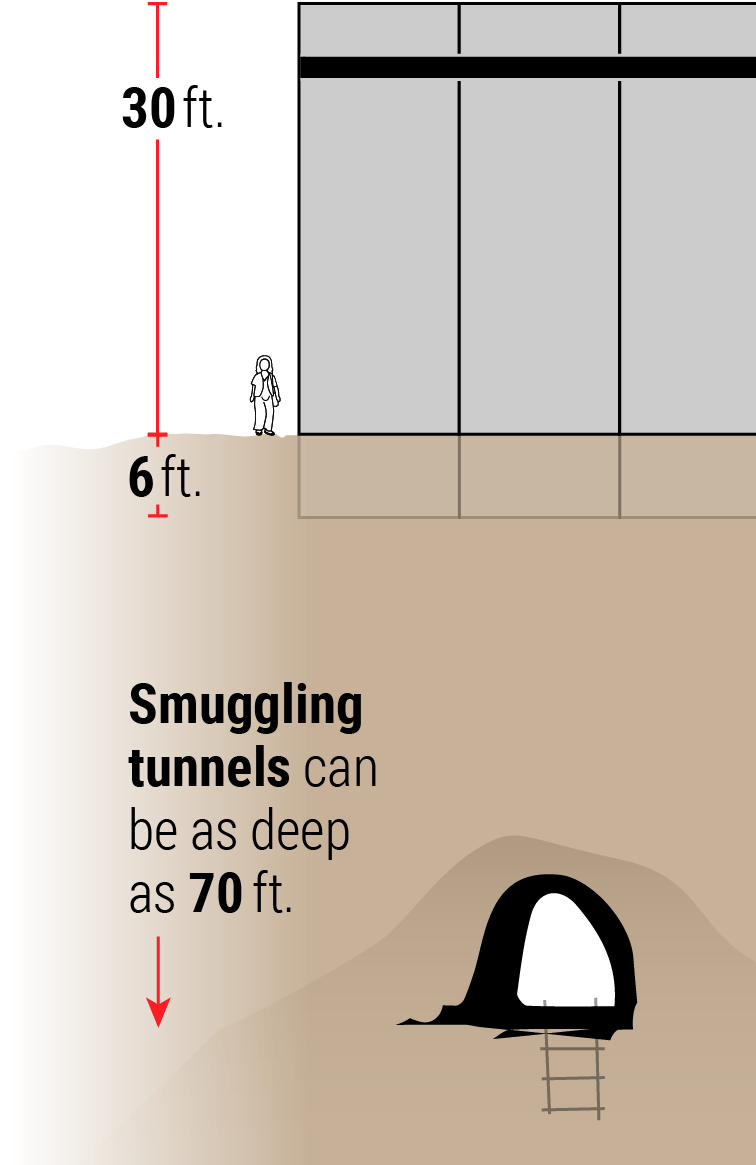
Drug smugglers accept been using tunnels to go drugs into the United States ever since United mexican states's most famous drug trafficker, Joaquín "El Chapo" Guzmán of the Sinaloa Cartel, pioneered the method in 1989. And the sophistication of these tunnels has only grown over time. In April 2016, U.S. police enforcement officials discovered a drug tunnel that ran more than than half a mile from Tijuana to San Diego and was equipped with ventilation vents, rails, and electricity. It is the longest such tunnel to be constitute and so far, just ane of 13 of great length and technological expertise discovered since 2006. Altogether, betwixt 1990 and 2016, 224 tunnels have been unearthed at the U.Due south.–Mexico border.
Other smuggling methods increasingly include the use of drones and catapults likewise as joint drainage systems betwixt border towns that have wide tunnels or tubes through which people can crawl and drugs can be pulled. But even if the land border were to become much more than secure, that would only intensify the tendency toward smuggling goods equally well every bit people via boats that sail far to the northward, where they land on the California coast.
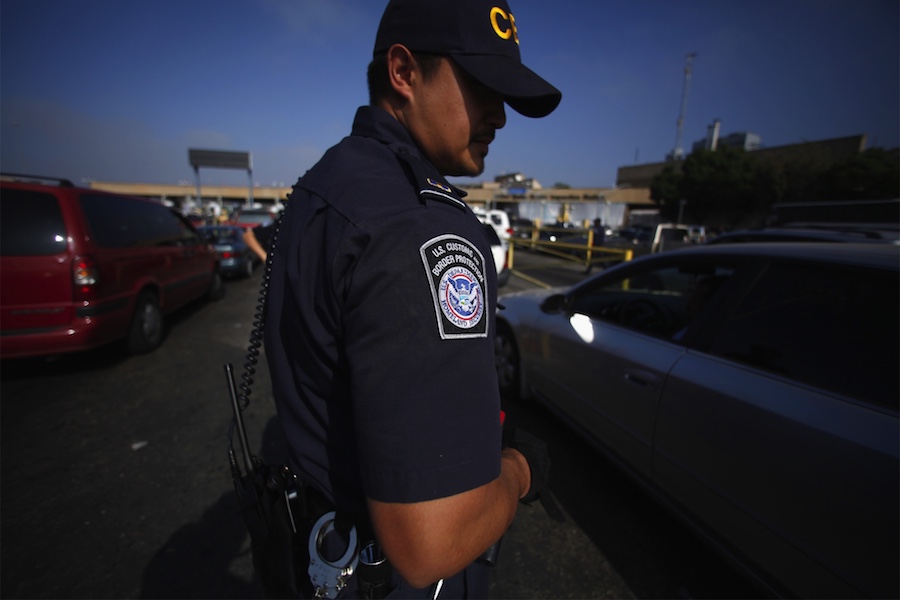
Another thing to consider is that a barrier in the form of a wall is increasingly irrelevant to the drug trade equally it is now practiced because near of the drugs smuggled into the U.Southward. from United mexican states no longer arrive on the backs of those who cantankerous illegally. Instead, according to the U.Southward. Drug Enforcement Administration, nearly of the smuggled marijuana equally well as cocaine, heroin, and methamphetamines comes through the 52 legal ports of entry on the edge. These ports take to procedure literally millions of people, cars, trucks, and trains every calendar week. Traffickers hide their illicit cargo in hush-hush, land–of–the art compartments designed for cars, or under legal goods in trailer trucks. And they have learned many techniques for fooling the border patrol. Mike, a grizzled U.Southward. border official whom I interviewed in El Paso in 2013, shrugged: "The narcos sometimes tip us off, letting u.s.a. find a car full of drugs while they send half dozen other cars elsewhere. Such write–offs are office of their business organisation expense. Other times the tipoffs are false. Nosotros search cars and cars, snarl up the traffic for hours on, and discover nada."
Beyond the Sinaloa Dare, 44 other significant criminal groups operate today in Mexico. The infighting within and among them has fabricated United mexican states one of the world's most vehement countries. In 2016 alone this violence claimed between 21,000 and 23,000 lives. Between 2007 and 2017, a staggering 177,000 people were murdered in United mexican states, a number that could really be much college, as many bodies are buried in mass graves that are hidden and never found. Those Mexican border cities that are principal entry points of drugs into the Unites States take been specially desperately affected past the violence.
Take Ciudad Juárez, for example. Directly across the border from peaceful El Paso. Ciudad Juárez was likely the world'south most tearing city when I was at that place in 2011 and information technology epitomizes what can happen during these drug wars. In 2011 the Sinaloa Cartel was battling the local Juárez Dare, trying to have over the city's smuggling routes to the Usa, and causing a veritable bloodbath. Walking around the contested colonías at the fourth dimension was like touring a cemetery: Residents would point out places where people were killed the twenty-four hours before, three days before, five weeks ago.


Juan, a skinny nineteen–year–old whom I met in that location that twelvemonth, told me that he was trying to get out of a local gang (the name of which he wouldn't reveal). He had started working for the gang as a halcone (a lookout) when he was 15, he said. Simply now as the drug war raged in the city and the local gangs were pulled into the infighting between the big cartels, his friends in the gang were being asked to practise much more than he wanted to exercise—to kill. Without whatever training, they were given assault weapons. Having no shooting skills, they only sprayed bullets in the vicinity of their assigned targets, hoping that at least some of the people they killed would be the ones they were supposed to impale, considering if they didn't succeed, they themselves might be murdered by those who had contracted them to do the job.
I met Juan through Valeria, whose NGO was trying to assist gang members similar Juan get on the direct and narrow. Only it was tough going for her and her staff to make the case. Equally Juan had explained to me, a member who refused to do the behest of the gangs could be killed for his failure to cooperate.
"And America does zero to finish the weapons coming here!" Valeria exclaimed to me.

While President Trump accuses United mexican states of exporting trigger-happy criminal offence and drugs to the United States, many Mexican officials as well as people like Valeria, who are on the ground in the fight confronting the drug wars, complain of a tide of violence and corruption that flows in the reverse direction. Some 70 percent of the firearms seized in Mexico between 2009 and 2014 originated in the United States. Although amounting to over 73,000 guns, these seizures yet likely represented only a fraction of the weapons smuggled from the United States. Moreover, billions of dollars per yr are fabricated in the illegal retail drug market place in the United States and smuggled back to Mexico, where the cartels depend on this coin for their basic operations. Sometimes, sophisticated money–laundering schemes, such as merchandise–based deals, are used; just large parts of the proceeds are smuggled as majority cash hidden in surreptitious compartments and among goods in the cars and trains daily crossing the border south to Mexico.
Some lxx percent of the firearms seized in United mexican states betwixt 2009 and 2014 originated in the United States.
And of course it is the U.S. need for drugs that fuels Mexican drug smuggling in the beginning identify. Have, for example, the electric current heroin epidemic in the United States. It originated in the over–prescription of medical opiates to care for hurting. The subsequent efforts to reduce the over–prescription of painkillers led those Americans who became dependent on them to resort to illegal heroin. That in turn stimulated a vast expansion of poppy cultivation in Mexico, particularly in Guerrero. In 2015, Mexico's opium poppy cultivation reached perhaps 28,000 hectares, enough to distill virtually lxx tons of heroin (which is even more than the 24–fifty tons estimated to be necessary to see the U.South. demand).

Mexico's large drug cartels, including El Chapo's Sinaloa Cartel, which is estimated to supply betwixt 40 and 60 percent of the cocaine and heroin sold on the streets in the United States, are the dominant wholesale suppliers of illegal drugs in the United States. For the retail trade, however, they normally recruit business partners amidst U.S. crime gangs. And thanks to the deterrence capacity of U.S. law enforcement, insofar every bit Mexican drug–trafficking groups do accept in–land operations in the U.S., such every bit in wholesale supply, they accept behaved strikingly peacefully and take not resorted to the cruel aggression and infighting that characterizes their business in Mexico. So the U.S. has been spared the drug–traffic–related explosions of violence that have ravaged and so many of the drug–producing or smuggling areas of Mexico.
Both the George West. Bush-league administration and the Obama assistants recognized the joint responsibility for drug trafficking between the United States and Mexico, an attitude that immune for unprecedented collaborative efforts to fight crime and secure borders. This collaboration allowed U.S. law enforcement and intelligence agents to operate in Mexico and aid their Mexican counterparts in intelligence development, training, vetting, establishment of police procedures and protocols, and interdiction operations. The collaboration as well led to Mexico being far more willing than it ever had been before to patrol both its northern border with the United states of america and its southern border with Cardinal America, as part of the effort to aid apprehend undocumented workers trying to cantankerous into the United States.
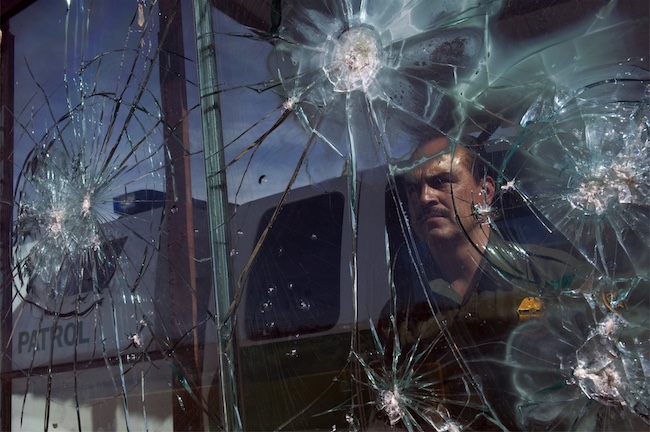
The Trump assistants'due south hostility to United mexican states could jeopardize this progress. In retaliation for edifice the wall, for whatsoever efforts the U.S. might brand to force Mexico to pay for the wall, or for the collapse of NAFTA, the Mexican government could, for example, surrender on its efforts to secure its southern border or stop sharing counterterrorism intelligence with the The states. Yet Mexico's cooperation is far more important for U.Due south. security than any wall.

Chicago police at the scene of a shooting in the Englewood neighborhood. Getty Images
What the wall would mean for crime in the U.Due south.
Although President Trump has railed against the "carnage" of crime in the United States, the crime statistics, with few exceptions, tell a very unlike story.
In 2014, fourteen,249 people were murdered, the lowest homicide rate since 1991 when there were 24,703, and part of a pattern of steady refuse in violent crime over that entire menstruation. In 2015, however, murders in the U.S. did shoot up to fifteen,696. This increment was largely driven past three cities—Baltimore, Chicago, and Washington, D.C. Baltimore and Chicago have decreasing populations, and all three have higher poverty and unemployment than the national boilerplate, high income and racial inequality, and troubled relations betwixt residents and police—atmospheric condition conducive to a rise in violent crime. In 2016, homicides fell in Washington and Baltimore, simply continued rising in Chicago.
There is no prove, notwithstanding, that undocumented residents accounted for either the rising in law-breaking or fifty-fifty for a substantial number of the crimes, in Chicago or elsewhere. The vast majority of violent crimes, including murders, are committed past native–built-in Americans. Multiple criminological studies bear witness that foreign–born individuals commit much lower levels of law-breaking than exercise the native–born. In California, for example, where at that place is a large immigrant population, including of undocumented migrants, U.S.–born men were incarcerated at a charge per unit two.v times higher than strange–born men.
Unfortunately, the Trump administration is promoting a policing arroyo that insists on prioritizing hunting down undocumented workers, including by using regular police force forces, and this kind of misguided police force enforcement policy is spreading: In Texas, which has an estimated 1.5 million undocumented immigrants, Republican Governor Greg Abbott recently signed a police force to punish sanctuary cities. Amongst the punishments are callous measures (such every bit removal from office, fines, and upwardly to one–year imprisonment) to be enacted against local law officials who exercise not cover immigration enforcement. Abbott signed the police despite the fact that police chiefs from all five of Texas's largest cities—Houston, San Antonio, Dallas, Austin, and Fort Worth—published a argument condemning information technology: "This legislation is bad for Texas and volition brand our communities more unsafe for all," they wrote in their Dallas Morning News op–ed. They argued that immigration enforcement is a federal, not a state responsibility, and that the new police force would widen a gap between police and immigrant communities, discouraging cooperation with police on serious crimes, and resulting in widespread underreporting of crimes perpetrated against immigrants. In that location is powerful and consistent evidence that if people begin to question the fairness, equity, and legitimacy of police force enforcement and government institutions, then they stop reporting law-breaking, and homicides increment.
Law chiefs in other parts of the country, from Los Angeles to Denver, have expressed similar concerns and also their dismay at having to devote their already overstrained resources to hunting downwardly undocumented workers.
The Trump administration has broadened the Obama–era criteria for "expedited removal." Under Obama any immigrant arrested within 100 miles of the border who had been in the country for less than 14 days—i.e., before he or she could institute roots in the United States—could be deported without due process. The result: In fiscal yr 2016, 85 percent of all removals (forced) and returns (voluntary) were of noncitizens who met those criteria. Almost all (more than 90 percent) of the remaining 15 percent had been bedevilled of serious crimes.
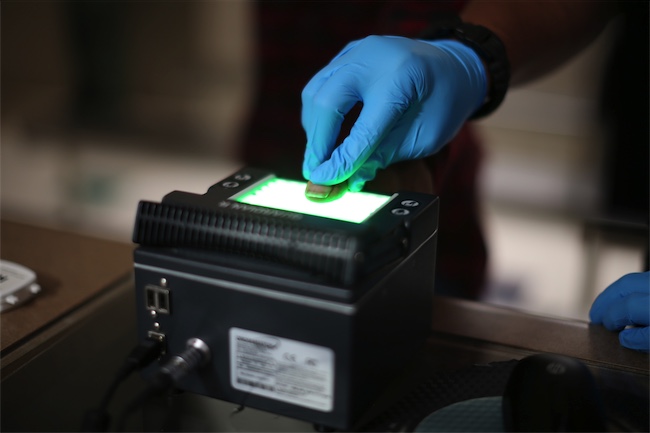
Now, still, any undocumented person anywhere in the country who has been here for as long as two years can be removed. And although information technology claims it volition focus on deporting immigrants who commit serious crimes, the Trump administration is gearing upwards for mass deportations of many of the eleven.1 million undocumented residents in the U.Southward., by far the largest number of whom come from Mexico (vi.2 one thousand thousand), Republic of guatemala, El salvador, Republic of honduras, Ecuador, and Colombia. To that stop, it is vastly expanding the definition of what constitutes deportable criminal offense, including fraud in any official matter, such as abuse of "any program related to the receipt of public benefits" or fifty-fifty using a fake Social Security number to pay U.Due south. taxes. The Trump administration is besides reviving the highly controversial 287(g) program under which local police enforcement officials can be deputized to perform immigration duties and tin can ask about a person'south immigration condition during routine policing of matters as insignificant as jaywalking.
Many of the people existence targeted have for decades lived lawful, safe, and productive lives here. About sixty percent of the undocumented accept lived in the United states of america for at least a decade. A third of undocumented immigrants aged xv and older have at to the lowest degree 1 kid who is a U.South. citizen by birth. The ripping apart of such families has tragic consequences for those involved, equally I accept seen beginning–hand.
"Many of the people being targeted [for deportation] have for decades lived lawful, condom, and productive lives hither."
Antonio, whom I interviewed in Tijuana in 2013, had lived for many years in Las Vegas, where he worked in structure and his wife cleaned hotels. Having had no encounters with U.S. police force enforcement, he risked going dorsum to Mexico to visit his ailing mother in Sinaloa. Simply he got nabbed trying to sneak back into the U.S. After a legal ordeal, which included being handcuffed and shackled and a degrading stay in a U.S. detention facility, he was dumped in Tijuana, where I met him soon after his arrival there. He dreaded existence forever separated from his wife and their two picayune boys, who had been born seven and v years before. But Sinaloa is a poor, tough identify to live, strongly nether the sway of the narcos, and Antonio did non want his loved ones to sacrifice themselves in society to rejoin him. As Antonio choked dorsum tears talking nearly how much he missed his family, I asked him whether they might travel to San Diego to speak with him across the bars of Friendship Park. But Antonio wasn't sure how long he could stay in Tijuana. He was afraid he would be arrested once more, this time in Mexico, because in gild to please U.S. law enforcement officials by appearing diligent in combating criminal offence, Tijuana'due south police force had gotten into the habit of arresting, for the most minor of infractions, Mexicans and Central Americans deported from the United States. Sweeping homeless poor migrants and deportees off the streets made Tijuana's city center appear peaceful, bustling, and clean again, subsequently years of a cartel bloodbath. Mexican businesses were pleased by the orderly look of the city center, the U.S. was gratified by Mexico's cooperation, and tourists were returning, with U.S. college students over again partying and getting drunk in Tijuana'due south cantinas and clubs. If harmless victims of U.Due south. deportation policies like Antonio had to pay the price for these benefits, then be it.
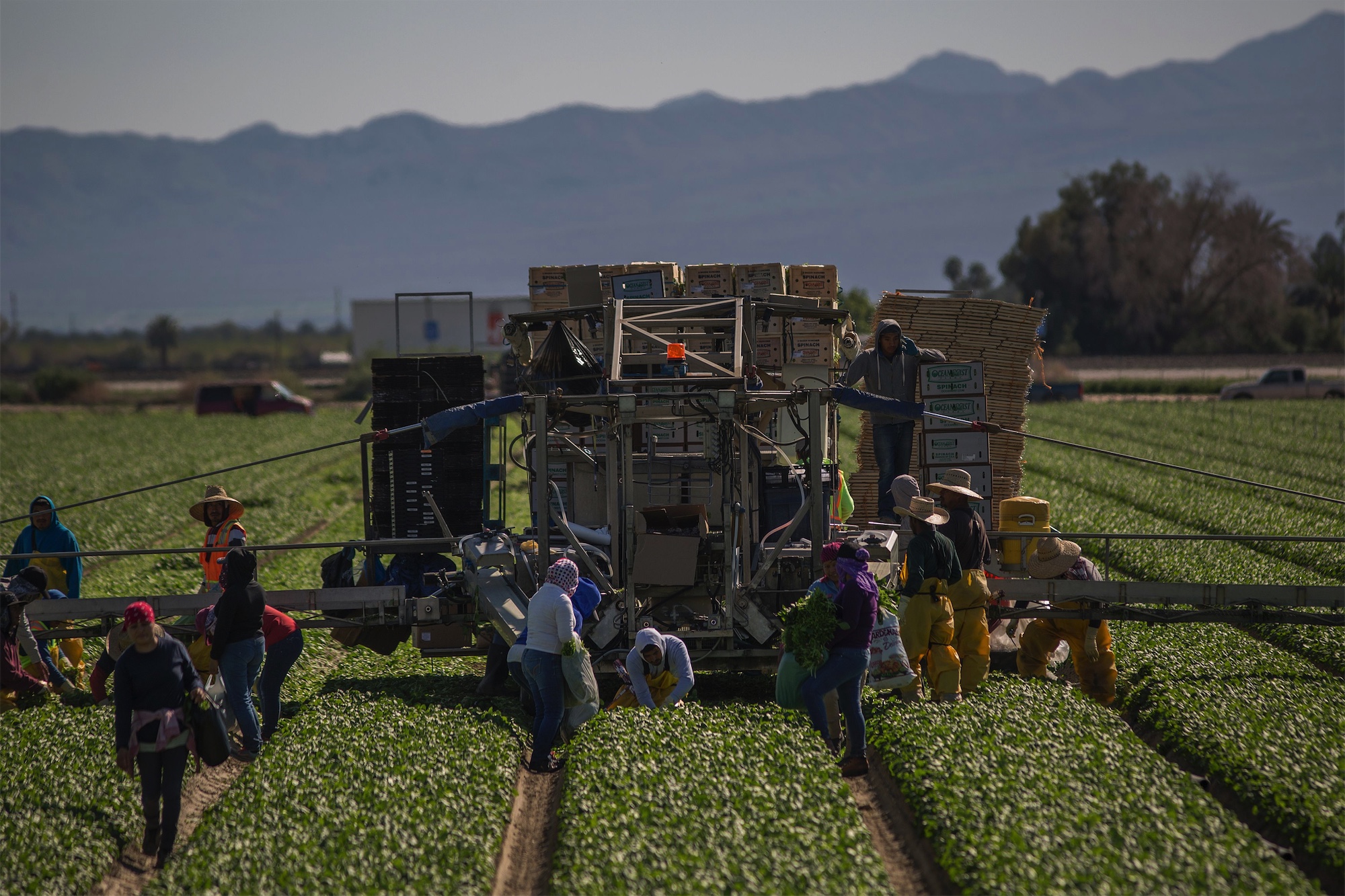
Immigrant farm workers harvest spinach near Coachella, California. Getty Images
How the wall would injure the U.Due south. economy
If immigrants are not responsible for any significant amount of offense in the Us and in fact are considerably less likely than native–built-in citizens to commit crime, and so what nearly the other justification for President Trump's vilification of immigrants, legal and illegal, and his conclusion to wall them out: Practice immigrants steal U.Due south. jobs and suppress U.S. wages?
There is trivial prove to support such claims. According to a comprehensive National Academies of Sciences, Engineering, and Medicine analysis, immigration does not significantly bear on the overall employment levels of near native–born workers. The bear on of immigrant labor on the wages of native–built-in workers is likewise low. Immigrant labor does accept some negative effects on the employment and wages of native–built-in high school dropouts, however, and also on prior immigrants, because all three groups compete for low–skilled jobs and the newest immigrants are oft willing to piece of work for less than their competition. To a large extent, still, undocumented workers often piece of work the unpleasant, back–breaking jobs that native–born workers are not willing to do. Sectors with large numbers of undocumented workers include agriculture, construction, manufacturing, hospitality services, and seafood processing. The fish–cut industry, for example, is unable to recruit a sufficient number of legal workers and therefore is overwhelmingly dependent on an undocumented workforce. Skinning, deboning, and cut fish is a evil-smelling, slimy, grimy, chilly, monotonous, and exacting chore. Many workers rapidly develop carpal tunnel syndrome. Information technology can be a dangerous job, with mechanism for cut off fish heads and deboning knives everywhere often leading to amputated fingers. The risk of infections from cuts and the bloody h2o used to launder fish is as well substantial. Over the past 10 years, multiple exposés have revealed that both in the United states and abroad, workers in the angling and seafood processing industries, often undocumented in other countries also, are subjected to forced labor weather condition, and sometimes treated like slaves.
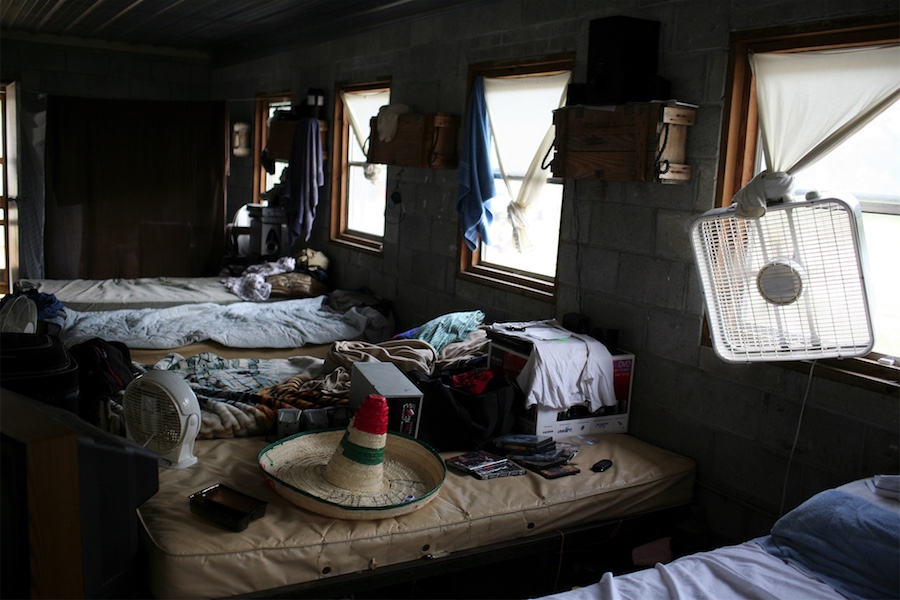
While paying more than jobs she could obtain in Honduras, the fish cut job was hard for 38–year–old Marta Escoto, profiled past Robin Shulman in a 2007 article in The Washington Post. But she put upwards with it for the sake of her two immature children, one of them a four–year–former daughter who couldn't walk and suffered from a gastrointestinal illness that prevented her from absorbing enough nutrition. Yet the fear of raids to which the Massachusetts fish–cutting industry was subjected a decade ago, in an earlier wave of anti–immigrant fervor, drove her to seek a job as a seamstress in a Massachusetts factory producing uniforms for U.S. soldiers. But misfortune struck in that location, also. Similar the seafood processing plants, the New Bedford factory was raided past U.S. immigration officers; and although Marta had no criminal record, she was arrested and rapidly flown to a detention facility in Texas while her children were left lone in a twenty-four hours care center. Dissimilar many other immigrants swept upward in those raids, Marta was ultimately lucky: She had a sister living in Massachusetts who could retrieve her children. And as a result of big political outcry in Massachusetts following those raids, with Senators John F. Kerry and Edward Thou. Kennedy strongly speaking out against them, Marta was released and could reunite with her two minor children. But she remained without documents authorizing her to work and stay in the U.s.a. and would again exist subject area to deportation in the future.
Estimated undocumented immigrant population
by state, 2014
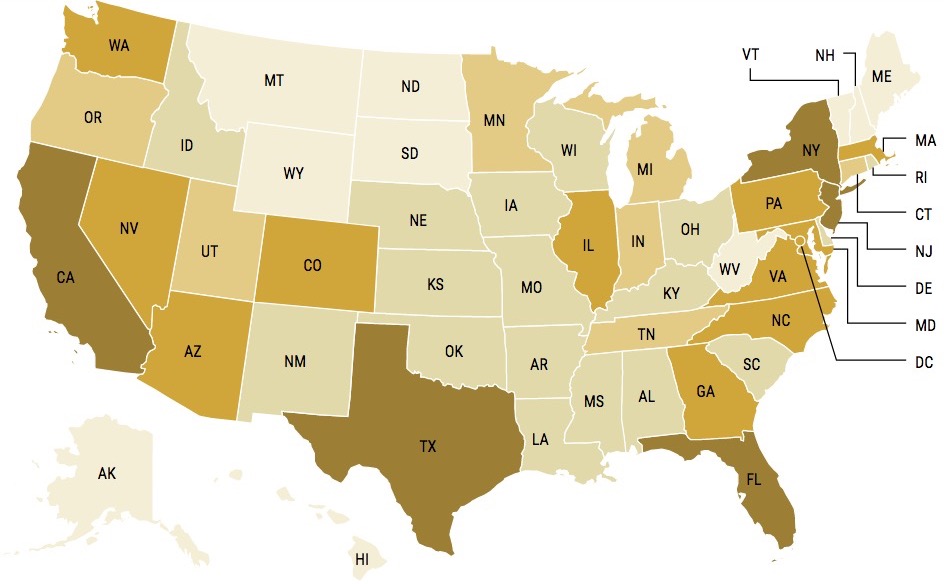
- ten,000 or less
- 25,000 – 95,000
- 100,000 – 130,000
- 180,000 – 450,000
- 500,000 – 2,350,000
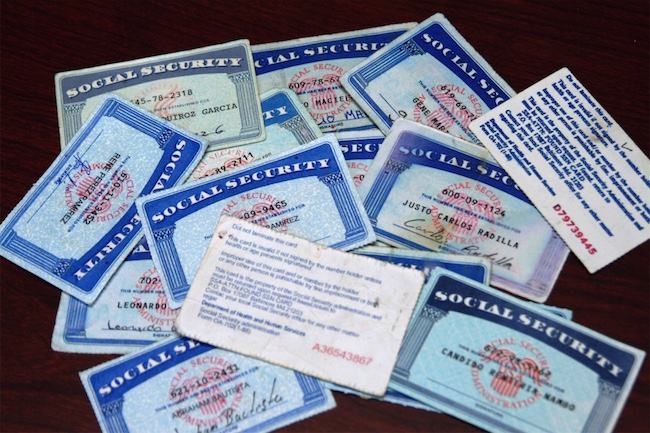
Immigrant workers are actually having a internet positive effect on the economy. Considering of a native–born population that is both declining in numbers and increasing in historic period, the U.S. needs its immigrant workers. The portion of foreign–born now accounts for about 16 percent of the labor force, with immigrants and their children accounting for the vast majority of current and futurity workforce growth in the U.s.a., If the number of immigrants to the The states was reduced—by deportation or barriers to further immigration—so that strange–born represented only about x percent of the population, the number of working–historic period Americans in the coming decades would remain substantially static at the current number of 175 one thousand thousand. If, nonetheless, the proportion of foreign–built-in remains at the current level, and so the number of working–age residents in the U.S. will increase by about xxx one thousand thousand in the next 50 years. We need these workers not just to fill jobs but to increment productivity, which has diminished sharply. Nosotros as well need them considering the number of the elderly cartoon expensive benefits like Medicare and Social Security—the costs of which are paid for by workers' taxes—is growing essentially. About 44 million people aged 65 or older currently draw Social Security; in 2050 that number is estimated to rising to 86 million. Even undocumented workers support Social Security: Since at least 1.8 one thousand thousand were working with simulated Social Security cards in 2010 in club to get employment but were generally unable to draw the benefits, they contributed $13 billion that year into the retirement trust fund, and took out only $i billion.
If immigrants are not stealing U.South. jobs and suppressing wages to any significant extent, is NAFTA doing so? Sal Moceri, a 61–yr–one-time Ford worker in Michigan, fervently believes so. He has not lost his job himself, but he saw his co–workers and neighbors lose jobs and sees new workers accepting lower wages for which he would not settle. Although he calls himself a "lifelong Democrat," he voted for Trump in 2016 because of Trump's promise to renegotiate or end NAFTA. In a CNNMoney interview with Heather Long, he blamed NAFTA for the job losses and decreases in wages around him, disbelieving the claims of economists that automation, not NAFTA, is the source of the job losses in U.South. manufacturing. He loves automation and hates NAFTA.
But contrary to Trump's claim and Moceri's passionate belief, NAFTA has not siphoned off a large number of U.S. jobs. It did strength some U.Southward. workers to find other kinds of work, merely the net number of jobs that was lost is relatively small, with estimates varying between 116,400 and 851,700, out of 146,135,000 jobs in the U.S. economic system. Countering these losses is the fact that the bilateral trade fostered by NAFTA has had far–reaching positive effects on the economy.
The trade agreement eliminated tariffs on half of the industrial goods exported to Mexico from the United states (tariffs which earlier NAFTA averaged 10 pct), and eliminated other Mexican protectionist measures besides, assuasive, for example, the export of corn from the United States to Mexico.
NAFTA has enabled the development of joint product lines between the United states of america and Mexico and allows the U.Due south. to more cheaply import components used for manufacturing in the United States. Without this kind of co–operation, many jobs would be lost, including jobs provided by cars imported from Mexico. In 2016, for example, the United States imported ane.half-dozen million cars from Mexico—but almost 40 percent of the value of their components was produced in the U.s.a.. Leaving NAFTA could jeopardize 31,000 jobs in the automotive industry in the United States alone. But now that it is threatened with the plummet or renegotiation of NAFTA, Mexico has already begun actively exploring new merchandise partnerships with Europe and China.
The big picture: Mexico is the tertiary largest U.S. trade partner after Communist china and Canada, and the 3rd–largest supplier of U.S. imports. Some 79 percentage of Mexico'southward total exports in 2013 went to the United states of america. Yeah, the U.s.a. had a $64.3 billion deficit with Mexico in 2016, but trade with United mexican states is a two–way street. The Us exports more to Mexico than to any other country except Canada, its other NAFTA partner. Moreover, the half trillion dollars in appurtenances and services traded betwixt Mexico and the United states each year since NAFTA was enacted over 23 years ago has resulted in millions of jobs for workers in both countries. According to a Woodrow Wilson Heart study, near v meg U.S. jobs at present depend on trade with Mexico.
Merchandise, investment, joint product, and travel beyond the U.Due south.–Mexico border remain a fashion of life for border communities, including those in the The states. Disrupting them will create substantial economic costs for both countries. And a significantly weakened Mexican economic system will also exacerbate Mexico's astringent criminal violence and encourage violence–driven immigration to the United States.
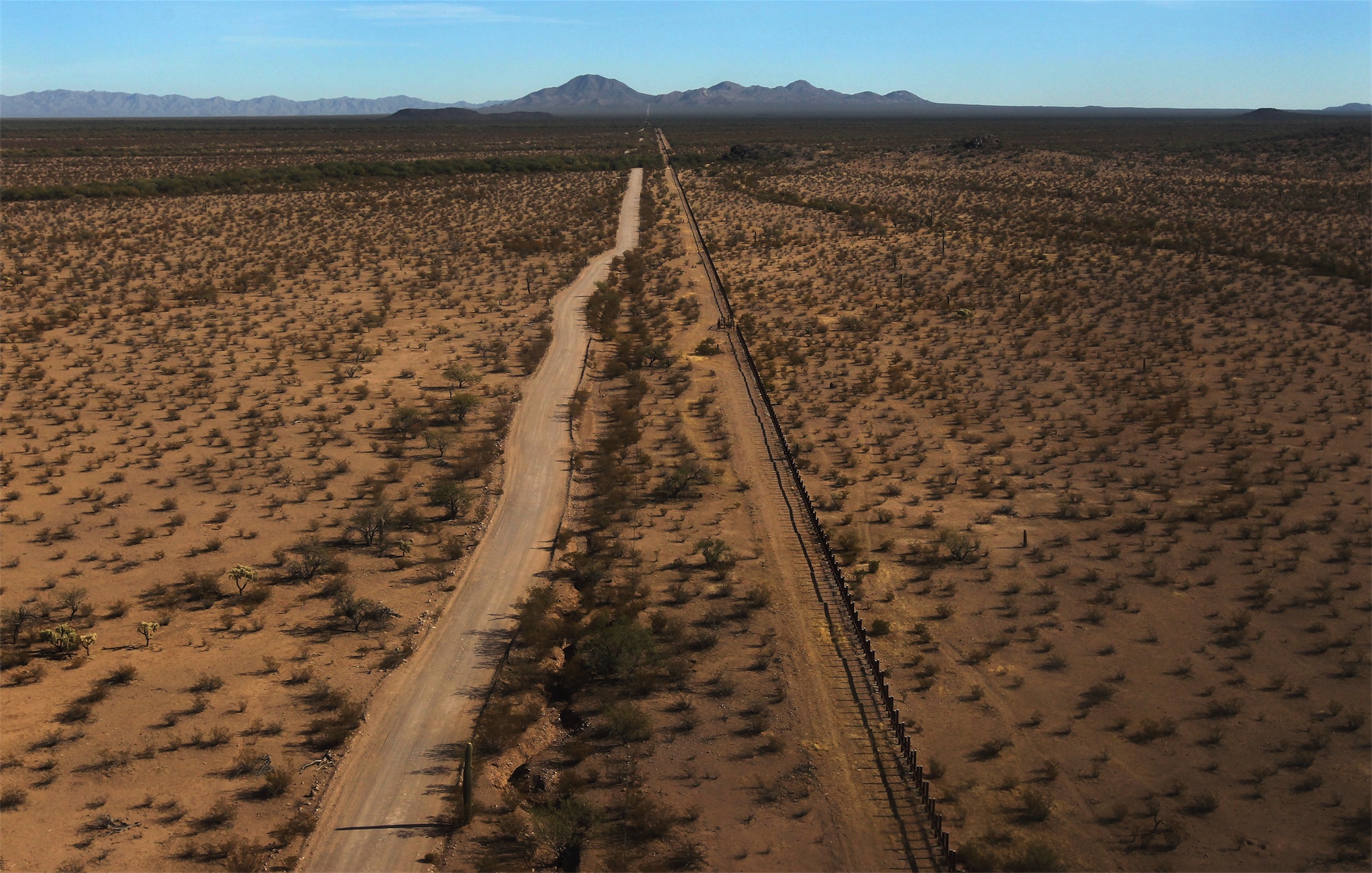
The U.S.-Mexico border argue through the Sonoran Desert, in the Tohono O'odham Reservation, Arizona. Getty Images
What the wall would do to communities and the environment
If erected, Trump's wall will not be the kickoff significant barrier to be built on the border. That distinction goes to the 700–mile argue the U.South. began to put upwards—over protests from those on both sides of the edge—some years ago.
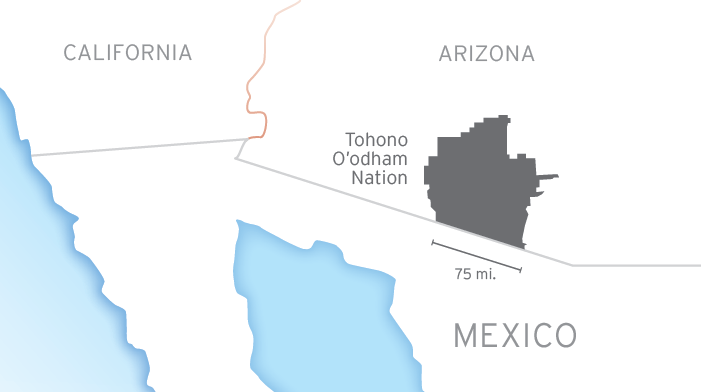
These people include 26 federally–recognized Native American Nations in the U.S. and viii Indigenous Peoples in Mexico. The edge on which the wall is to exist built cuts through their tribal homelands and separates tribal members from their relatives and their sacred sites, while besides sundering them from the natural environment which is crucial not simply to their livelihoods merely to their cultural and religious identity. In recognition of this problem, the U.S. Congress passed an act in 1983 allowing gratuitous travel across the borders within their homelands to one of the Native American Nations tribes. But when the fence was congenital, by waiving statutes like the National Historic Preservation Act of 1966, the Native American Graves Protection and Repatriation Deed of 1990, and the American Indian Religious Freedom Act of 1994, Congress compromised that liberty of travel and made information technology hard for ethnic people to visit their family members and sacred sites.
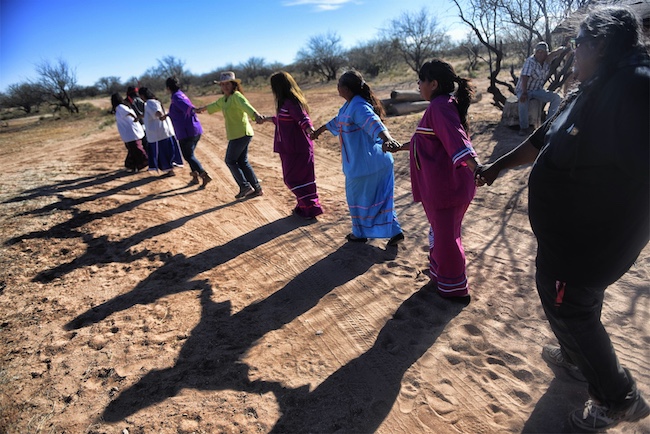
Trump's wall will, of course, exacerbate the impairment to these Native American communities, causing not bad hurting and anger amongst the inhabitants. "If someone came into your firm and built a wall in your living room, tell me, how would you experience almost that?" asked Verlon Jose, vice chairman of the Tohono O'odham Nation, in an interview past The New York Times' Fernanda Santos in Feb 2017. Stretching out his arms to embrace the saguaro desert effectually him, he said, "This is our home." Many in his tribe want to resist the construction of the wall. Others fearfulness that if the border barrier is weaker on the tribal land, drug smuggling volition exist funneled there as happened before with the fence, harming and ensnarling the community.
As Native American communities, conservation biologists, and the U.S. Fish and Wildlife Service all have highlighted, the wall will also take significant environmental costs in areas that host some of the greatest biodiversity in North America. Deriving its name from the isolated mountain ranges whose 10,000–foot peaks thrust into the skies, the "Sky Islands" region spanning southeastern Arizona, southwestern New United mexican states, and northwestern United mexican states, for instance, features a staggering assortment of flora and creature. Its precious, but fragile, biodiversity is due to the unusual convergence of iv major ecoregions: the southern terminus of the temperate Rocky Mountains; the eastern extent of the low–elevation Sonoran Desert; the northern edge of the subtropical Sierra Madre Occidental; and the western terminus of the higher–tiptop Chihuahuan Desert. Among the endangered species that will exist afflicted past the wall are the jaguar, Sonoran pronghorn, Chiricahua leopard frog, bottom long–nose bat, Cactus ferruginous pygmy–owl, Mexican gray wolf, blackness–tailed prairie dog, jaguarondi, ocelot, and American bison. Other negatively–affected species volition include desert tortoise, blackness behave, desert mule deer, and a variety of snakes. Even species that can fly, such as Rufous hummingbirds and Swainson and Gray hawks could be harmed, and vital insect pollinators that migrate across the border could be burnt up by the lights necessary to illuminate the wall.
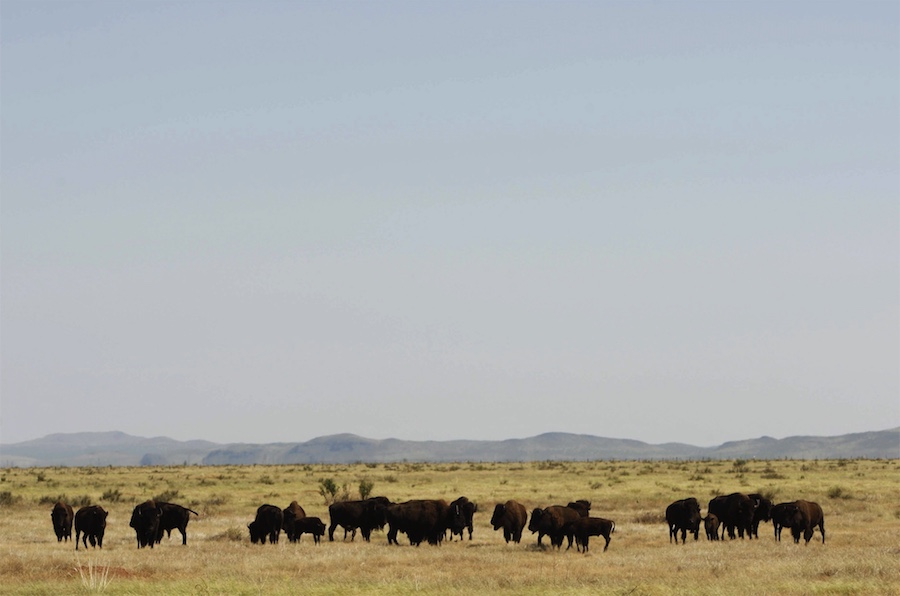
Altogether, more than 100 species of animals that occur forth the U.S.–United mexican states border, in the Sky Islands area too as in the Big Bend National Park in Texas and in the Rio Grande Valley, are endangered or threatened. But just as the DHS waived numerous cultural protection statutes to build the contend, information technology also overrode many crucial ecology laws—including the Endangered Species Human action of 1973, the Migratory Bird Treaty Act of 1918, the National Environmental Policy Act of 1970, the Coastal Zone Management Human action of 1972, and the Clean H2o Deed of 1972. The Trump assistants wants to drive through any remaining ecology considerations.

The administration's approach threatens years of binational environmental border cooperation that has protected non simply many wild species, but likewise agriculture on both sides of the edge. Take the boll weevil, a beetle that flies between United mexican states and the Usa and devastates cotton fiber crops. In the late 1890s, the boll weevil nearly wiped out the U.South. cotton industry. Since so, the U.s. and Mexico accept spent decades trying to eradicate the pest and nigh succeeded. But the wall may then sour U.S.–Mexico environmental and security cooperation that Mexico may simply give up on eradication efforts. This will crusade niggling impairment to those in Mexico, since there is little cotton cultivation along that part of the Mexican border, but it will event in meaning harm to U.Due south. farmers.
A poisoned U.S.–Mexican human relationship could besides prevent the renegotiation of water sharing agreements that are disquisitional to the environment equally well as to water and food security, and to farming. For example, the 1970 Boundary Treaty between the Usa and United mexican states specifies that officials from both the U.S. and Mexico must hold if either side wants to build any structure that could affect the flow of the Rio Grande or its flood waters, water that is vital to livestock and agriculture along the edge. The debate was built despite Mexico's objections to it, and because its steel slats get clogged with debris during the rainy season, it has caused floods affecting cities and previously protected areas on both sides of the border, resulting in millions of dollars in damages.
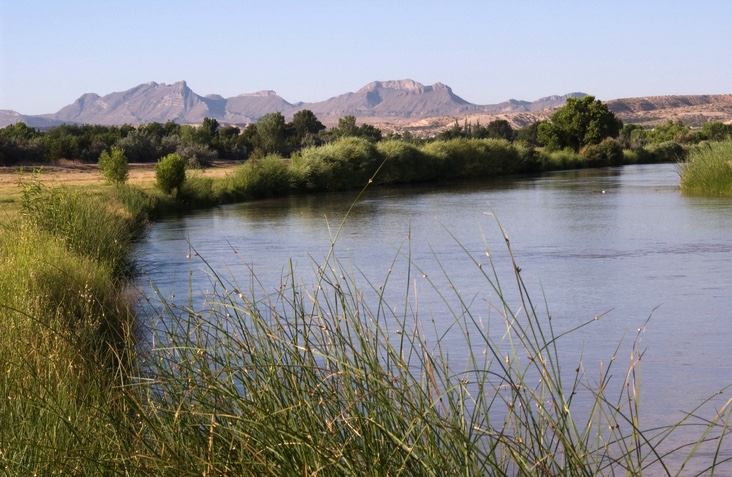
It wasn't just Mexico that didn't want that contend. U.S. farmers and businessmen along the Texas border in the Rio Grande valley opposed it, besides, since it blocks their access to the river h2o and also augments the severity of floods. At present the wall is to exist brought to overflowing obviously areas in Texas where water issues precisely similar these had prevented the construction of the debate before.
Meanwhile, manufacturing, agriculture, hydraulic fracking, free energy production, and ecosystems on both sides of the border depend on equitable and effective h2o sharing from the Rio Grande and the Colorado River, with both sides vulnerable to h2o scarcities. Over the decades there have been many challenges to the articulation agreements governing h2o usage, and both Mexico and the U.Due south. have at times considered themselves the aggrieved parties. But in general, U.S.–Mexico cooperation over both the Rio Grande and Colorado rivers has been exceptional by international standards and has been hugely beneficial to both partners to the various treaties. That kind of co–functioning is at present at chance.
U.S.–United mexican states cooperation over both the Rio Grande and Colorado rivers has been exceptional by international standards and has been hugely beneficial to both partners
If in retaliation for the Trump administration's vitriolic, anti–Mexican language and policies, Mexico decided non live upwards to its side of the water bargain, U.S. farmers and others along the Rio Grande would exist nether severe threat of losing their livelihoods. I of them is Dale Murden in Monte Alto, who on his 20,000–acre farm cultivates sugarcane, grapefruit, cotton, citrus, and grain. Named in January 2017 the Citrus Male monarch of Texas, the former Texas Subcontract Agency state director has dedicated his life to agriculture in southern Texas, relying on a Latino workforce. Yet he has memories of devastating h2o shortages in 2011 and 2013, when because of a astringent drought Mexico could non send its resource allotment of the Rio Conches to the U.s. and xxx percentage of his land became unproductive, with many crops dying. At that fourth dimension he hoped that the U.S. State Section could persuade Mexico to release some water, even as Mexican farmers were as well facing immense water shortages and devastation. U.S. affairs did work, no dubiousness helped by the rain that replenished Mexico'southward tributaries of the Rio Grande. Without the rain, Mexico would not accept been able to pay back its accumulated water debt. Just without collaborative U.S.–United mexican states diplomacy and an atmosphere of a closer–than–always U.S.–Mexico cooperation, Mexico yet could take failed to deliver the water despite the pelting. That positive spirit of cooperation also produced one of the world's most enlightened, environmentally–sensitive, and water–employ–savvy version of a water treaty, the and then–called Minute 319 of the 1944 Colorado River U.S.–United mexican states water agreement. Unique in its recognition of the Colorado River delta equally a h2o user, the update committed the United states of america to sending a and so–chosen "pulse period" to that ecosystem, thus helping to restore those unique wetlands. The United States too agreed to pay $18 one thousand thousand for h2o conservation in Mexico. In plough, Mexico delivered 124,000 acre–anxiety of Mexican water to Lake Mead. It was a win–win–win: for U.Southward. farmers, Mexican farmers, and ecosystems. But those were the practiced days of the U.S.–United mexican states relationship, before the Trump administration. A new update to the treaty is under negotiation—in one case once again a vital understanding and a lifeline for some 40 meg people on both sides of the border that could fall prey to the Trump assistants's approach to Mexico.
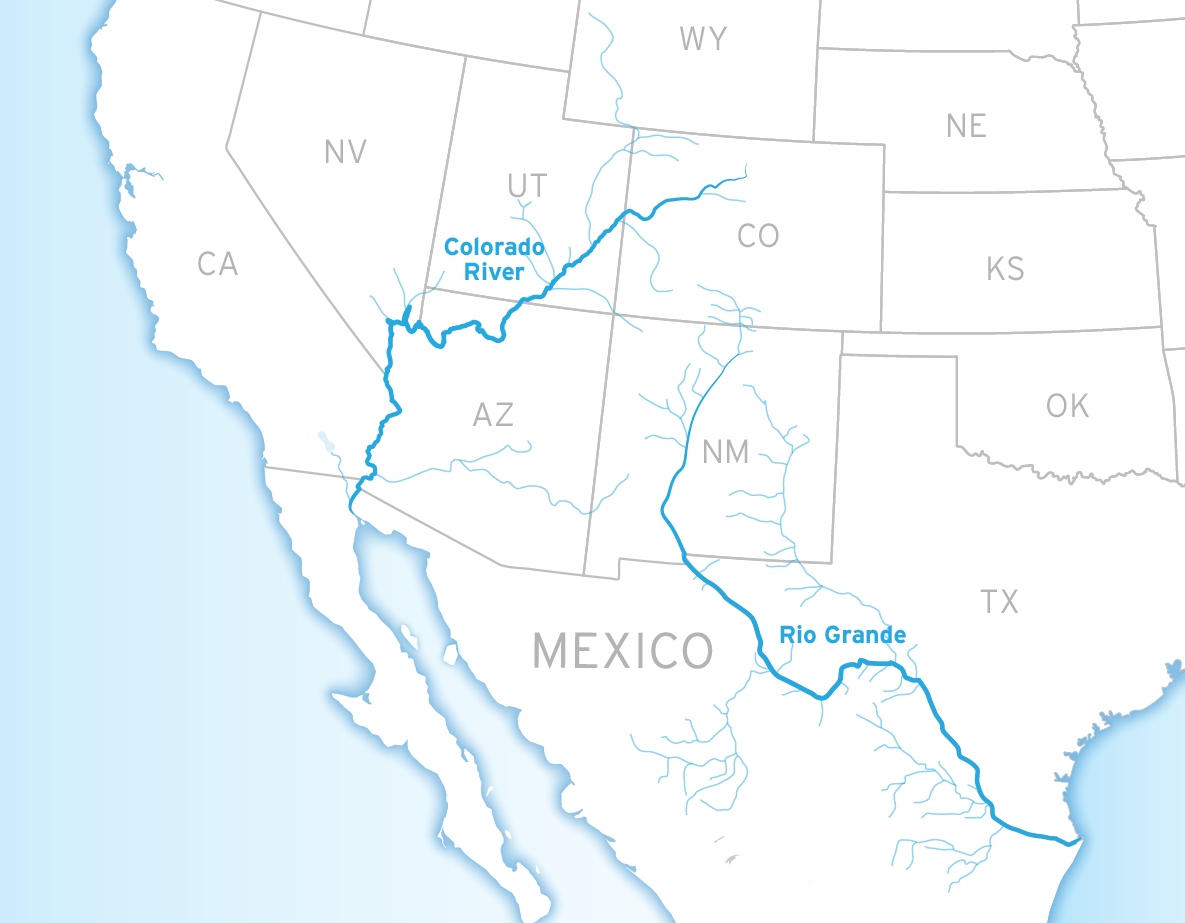
Yet this is a moment when maintaining cooperation is crucial because climate–alter–increased evaporation rates, invasive establish infestation, and greater demands for water around the border and deep into U.South. and Mexican territories volition just put further pressure on water use and increment the likelihood of severe scarcity.
Rather than a line of separation, the edge should be conceived of equally a membrane, connecting the tissues of communities on both sides, enabling mutually beneficial merchandise, manufacturing, ecosystem improvements, and security, while enhancing inter–cultural exchanges.
In 1971, When First Lady Pat Nixon attended the inauguration of Friendship Park—that tragic identify that allows separated families simply the most limited amount of contact—she said, "I hope there won't be a contend here too long." She supported two–way positive exchanges betwixt the United States and Mexico, not barriers. In fact, for her visit, she had the debate in Friendship Park torn down. Unfortunately, it's withal there, bigger, taller, and harder than when she visited, and with the wall nigh to get much worse nevertheless.

Vanda Felbab-Brown is a senior boyfriend at the Brookings Institution. She is an expert on international and internal conflicts and nontraditional security threats, including insurgency, organized offense, urban violence, and illicit economies. Her fieldwork and enquiry take covered, among others, Afghanistan, South asia, Burma, Indonesia, the Andean region, Mexico, Morocco, Somalia, and eastern Africa. Her books include The Extinction Market: Wildlife Trafficking and How to Counter It (Hurst, 2017) and Shooting Upwardly: Counterinsurgency and the War on Drugs (Brookings Establishment Press, 2010). She received her doctorate in political science from MIT and her bachelor's from Harvard University.
andersonfropeorcee.blogspot.com
Source: https://www.brookings.edu/essay/the-wall-the-real-costs-of-a-barrier-between-the-united-states-and-mexico/
0 Response to "What Are Arguments Agains the Wall"
Post a Comment